Tenkeyless · CHF 479
ÉTALON 87
The reference artefact. The one the others are measured against.
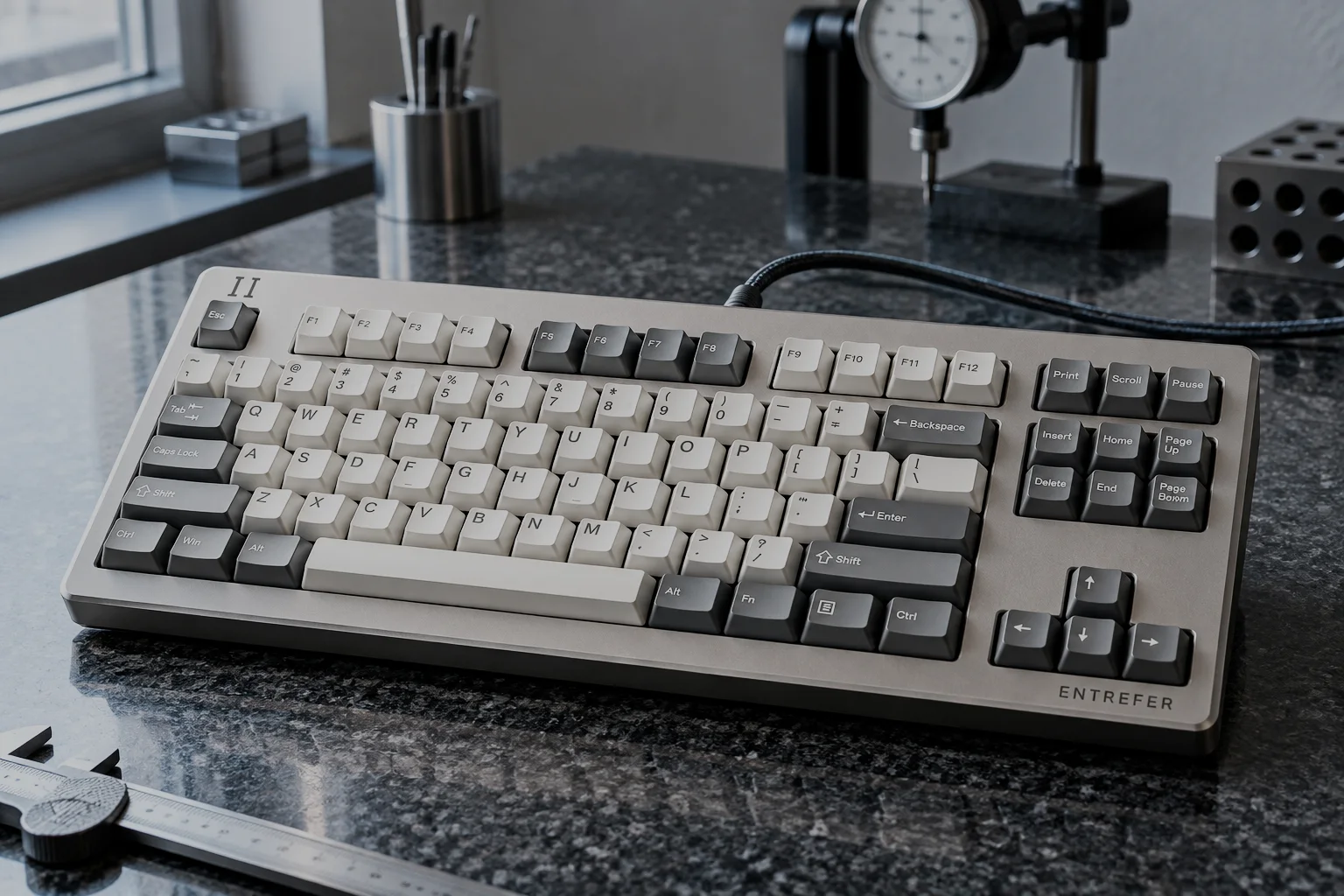
Why it is called that
ÉTALON
An étalon is the standard a laboratory keeps to check its own instruments. This is the board with the 8 kHz report rate, the tightest shipping tolerance, and the certificate that lists every key.
87
keys
1.87kg
without cable
8kHz
report rate
Its own key field
Scroll sideways for the whole board →
87 keys, 18.25 × 6.25 u at 19.05 mm — the same pitch every keyboard has used since the Selectric, and the module this whole page is set on.
Specification
| Item | Value |
|---|---|
| Layout | Tenkeyless, 87 keys, ANSI |
| Key field | 18.25 × 6.25 u at 19.05 mm pitch = 347.7 × 119.1 mm |
| Case | 363.7 × 135.1 × 33 mm |
| Weight | 1.87 kg, +180 g with the Laiton weight |
| Material | CNC 6082-T6 aluminium, bead-blast 120 grit, Type II anodise |
| Mount | Gasket, 1.5 mm FR4 plate |
| PCB | 1.6 mm, four layer, one EF-1c per key |
| Switches | PALPEUR, five-pin hot-swap |
| Report rate | 8 000 Hz, always |
| Connection | USB-C, detachable, 1.8 m braided. No wireless. |
| Indicator | One white strip under the front edge |
| In the box | Board, cable, switch puller, keycap puller, 2.5 mm hex driver, bulletin d'étalonnage |
| Price | CHF 479 |
Finishes
The house finish. The colour of the limestone Neuchâtel is built from.
Slate. Type II anodise run long, at the dark end of what the bath will give.
Silver anodise over a finer 180-grit blast. The only finish that shows a fingerprint.
A brass bottom weight, unlacquered, that will go brown in a year. +CHF 65.
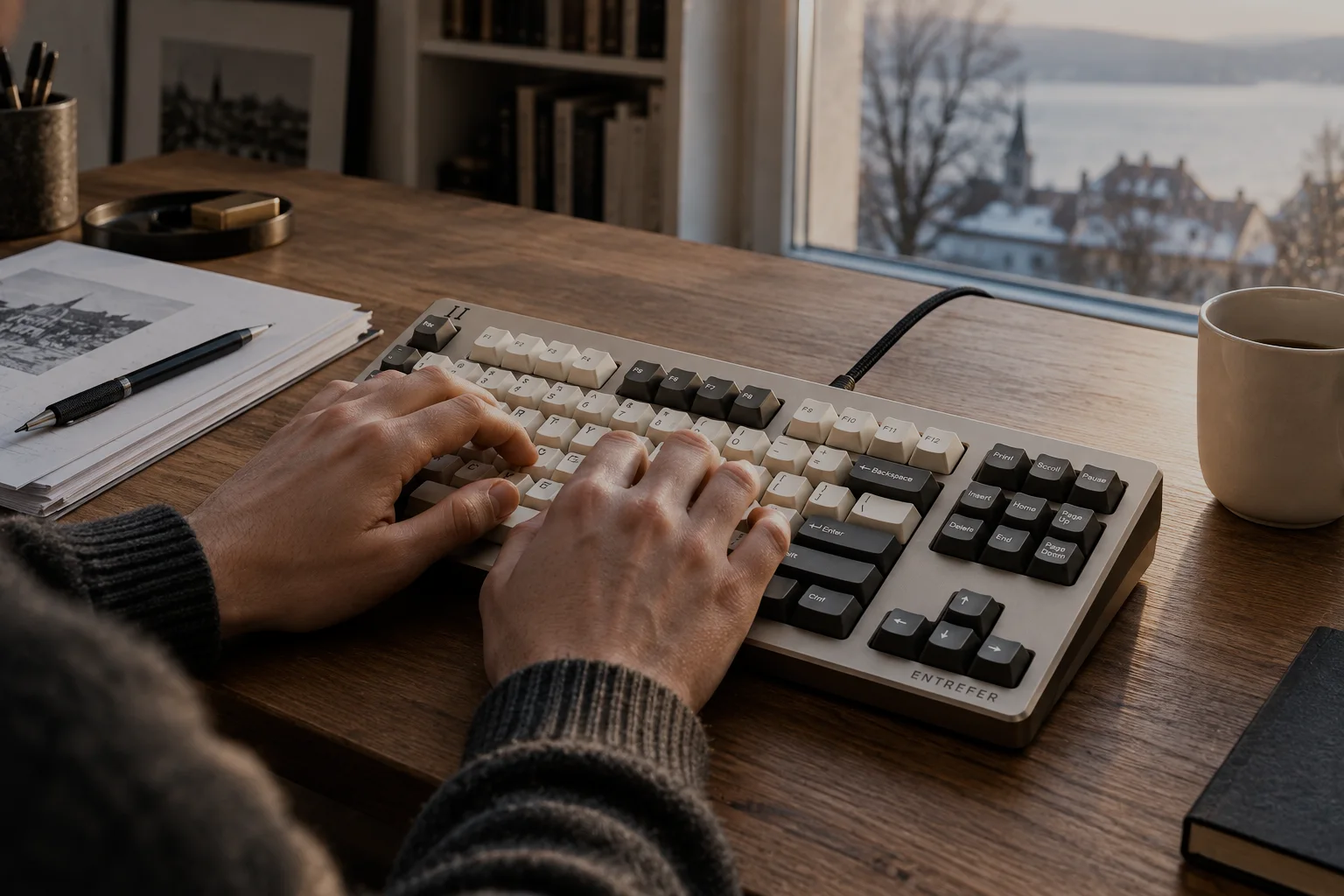
The stack
Six layers, in the order they go together.
- KeycapsDye-sub PBT, 1.4 mm wall, Cherry profile.
- Switches87 PALPEUR, five-pin, in hot-swap sockets.
- Plate1.5 mm FR4, one 14.0 mm cut-out per key, on two Poron gaskets.
- PCB1.6 mm, four layer. One EF-1c under every key.
- Top case6082-T6, a frame around the key field.
- Bottom case6082-T6 tray, brass weight, four feet, USB-C.
Forty-eight frames of one model. Every layer is the same layer at a different height, which is the point — nothing here is six pictures of six keyboards.
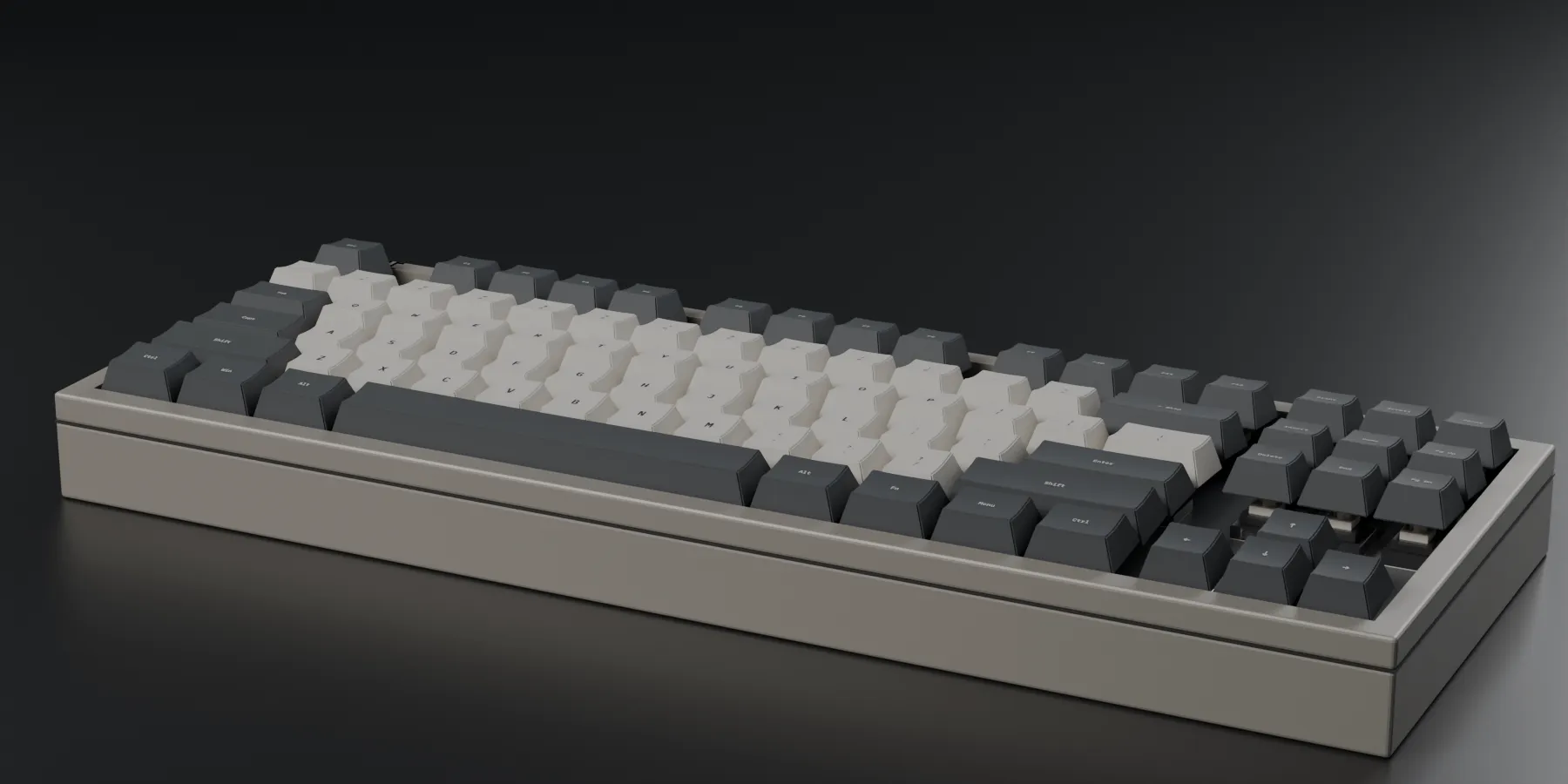
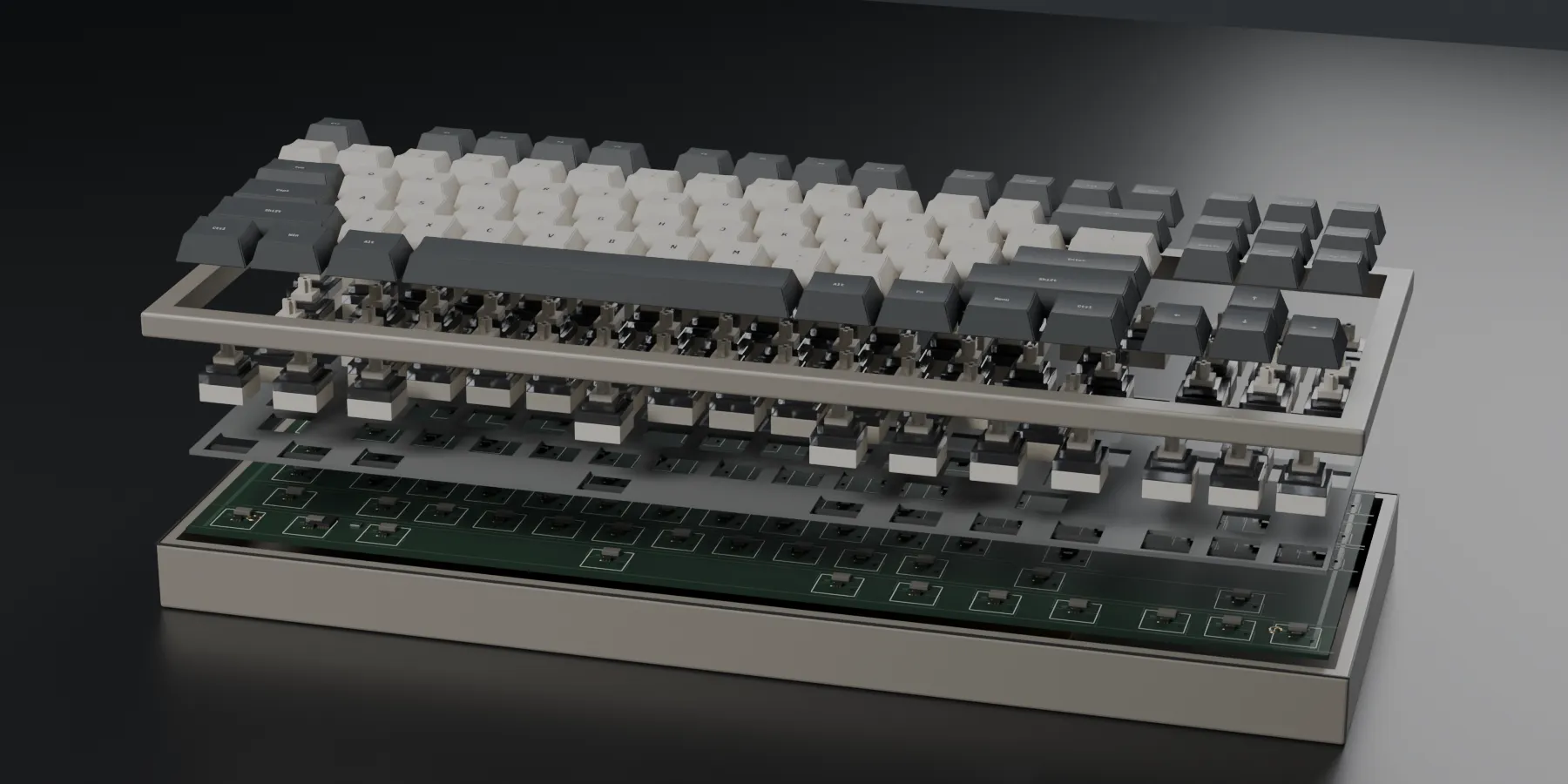
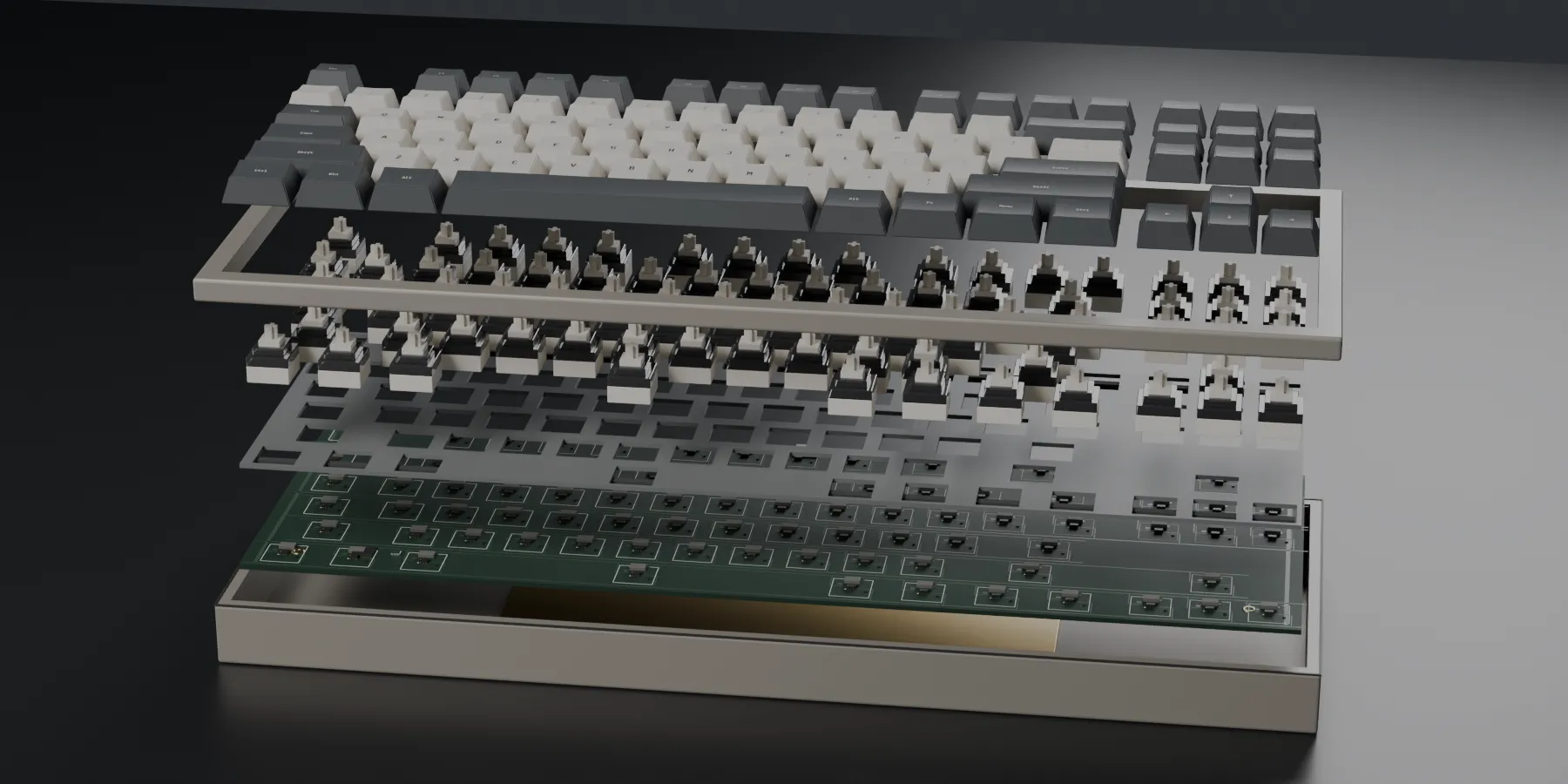
Three frames of the eighty. The whole move is on the front page, where scrolling drives it and the camera carries on down into the stack.
One per key
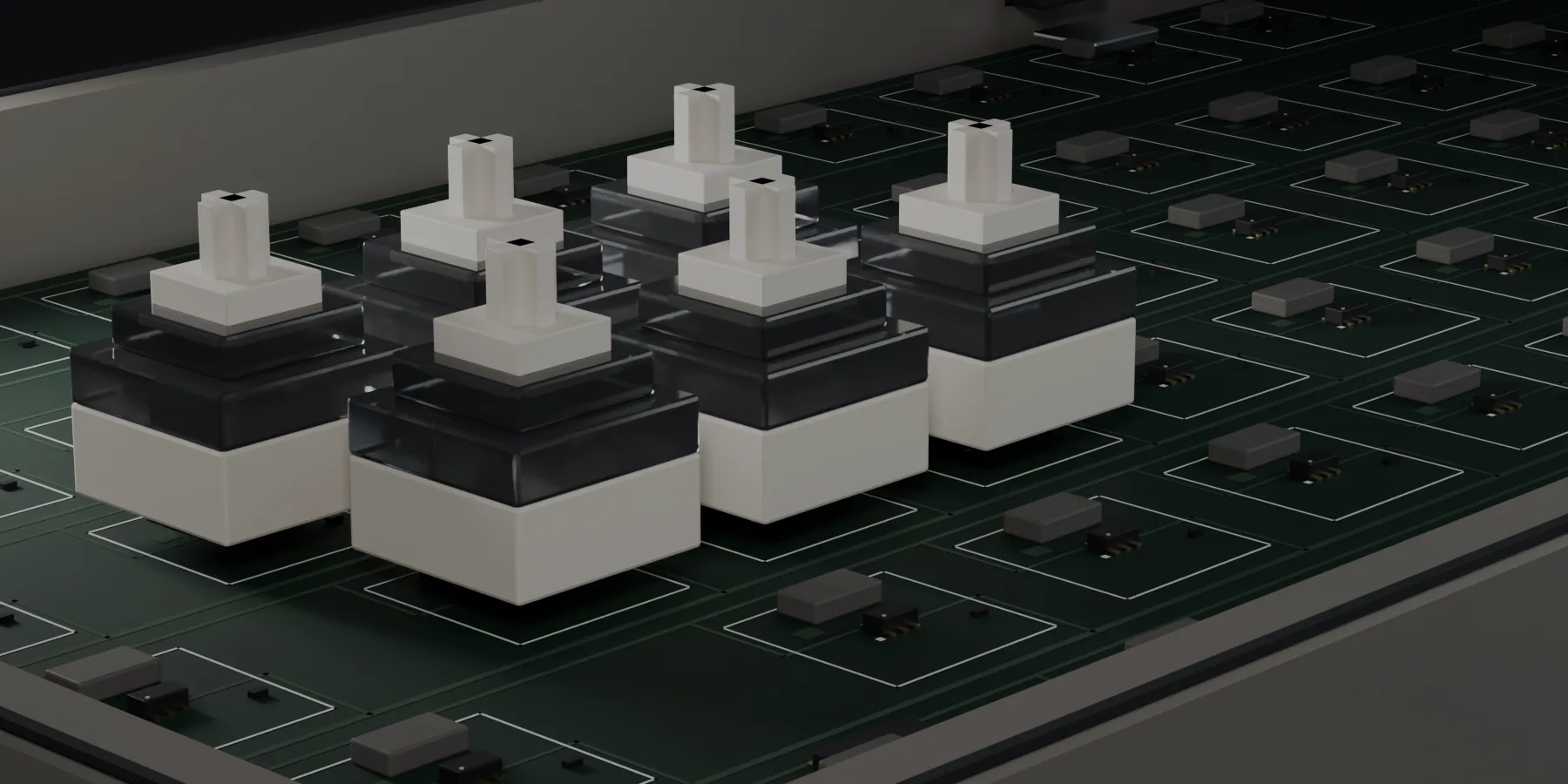
Eighty-seven sensors on 19.05 mm centres.
Not a scanning matrix and not one sensor multiplexed across a row. Every key has an EF-1c of its own, directly under its magnet, read continuously. That is the reason all 87 can report a position at the same time, and it is also the reason the certificate has 87 lines on it.
The other two
VERNIER 61
The auxiliary scale. Reads the fraction between two divisions.
- Layout
- 60 %
- Case
- 301.8 × 111.3 mm
CHF 329
CADRAN 68
A dial you can turn, on a board that already reads one.
- Layout
- 65 % + encoder
- Case
- 320.8 × 111.3 mm
CHF 389
PALPEUR
The switch, on its own. Three weights, forty to a box.
- Travel
- 3.60 mm
- Life
- 100 M
CHF 39