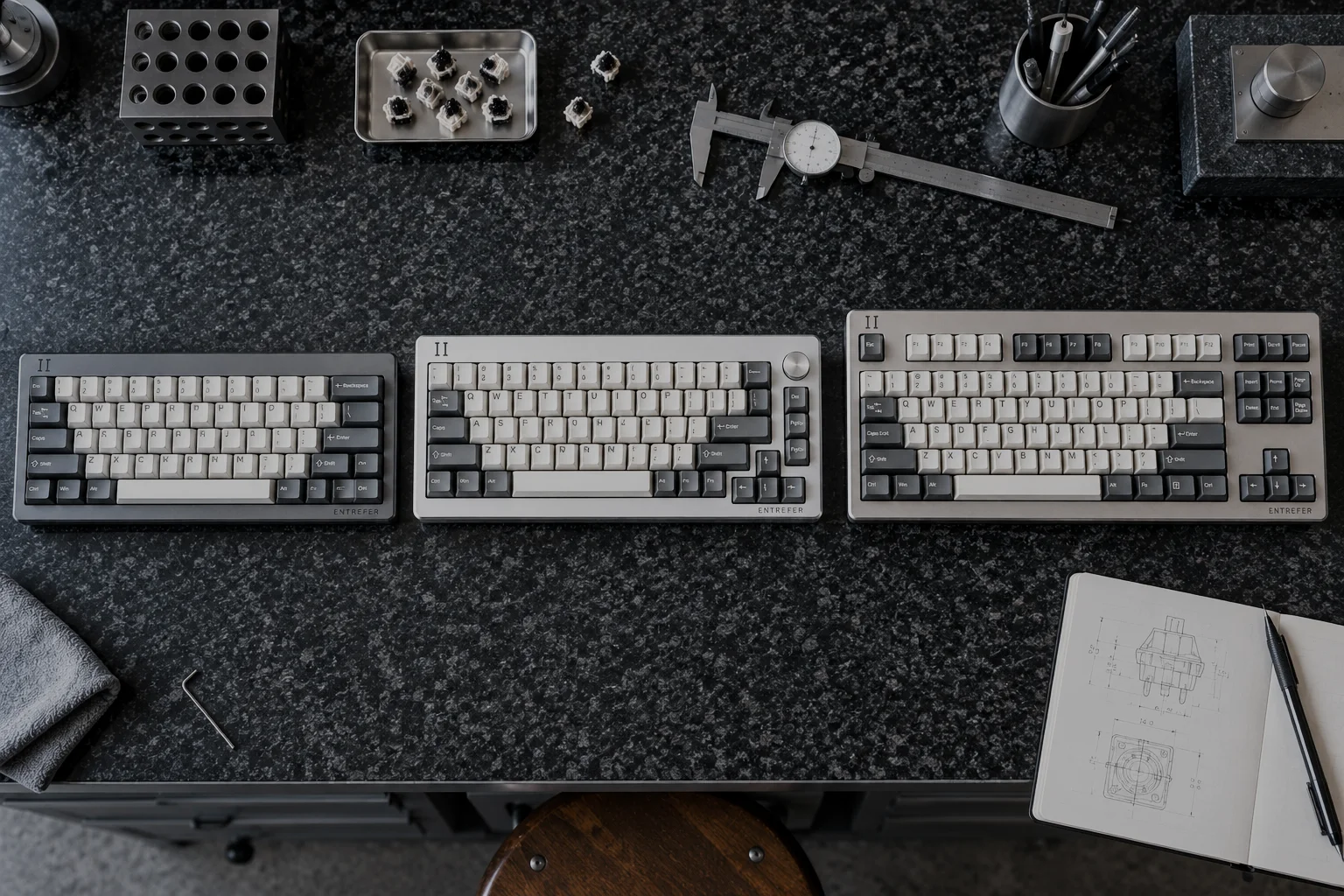
Matières
Six materials, and a reason for each.
Nothing here is chosen because it sounds expensive. Each one is the answer to a question the rest of the design had already asked.
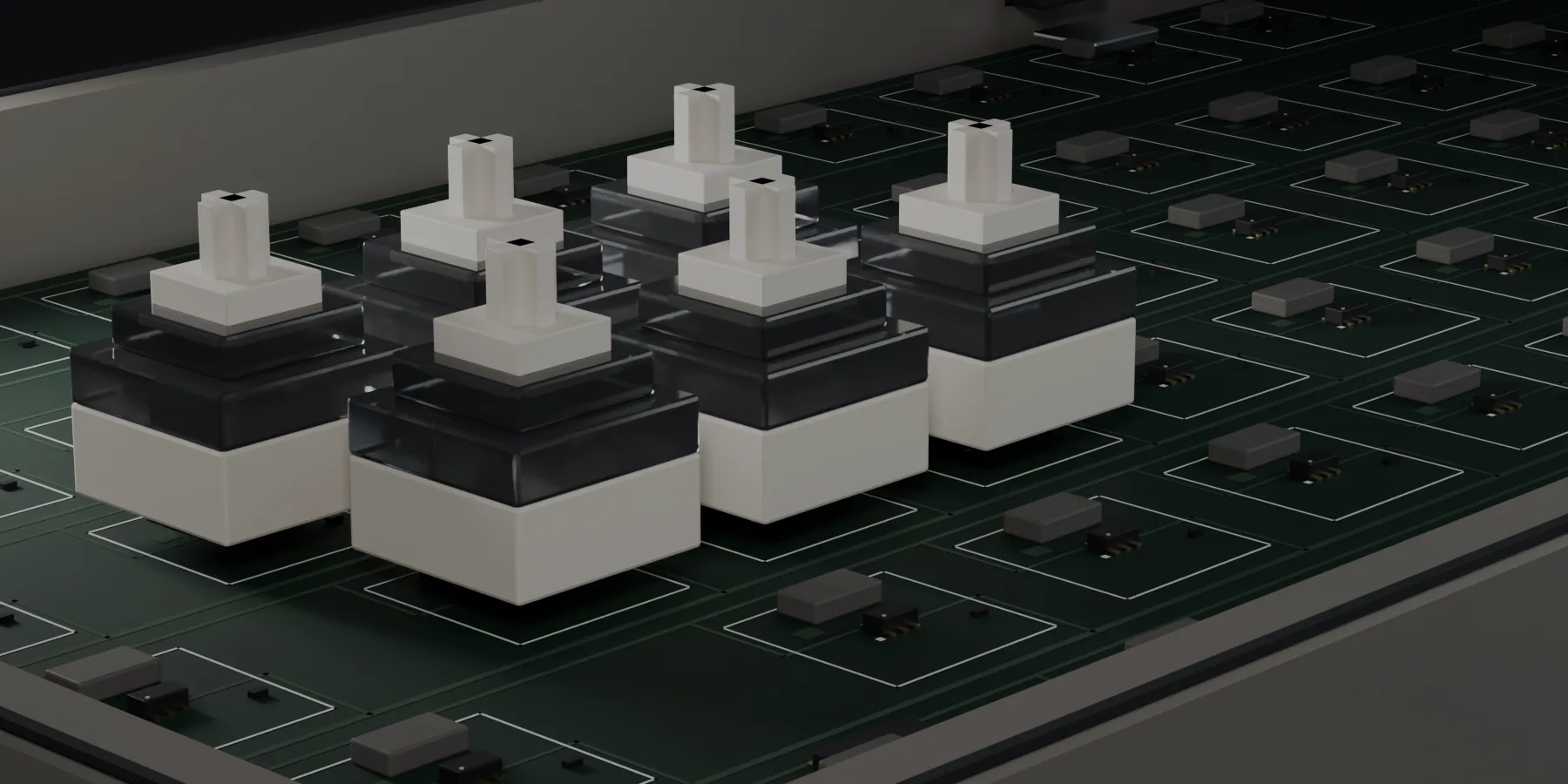
| Where | What | Why that one |
|---|---|---|
| Case | 6082-T6 aluminium | The European structural alloy. It machines a cleaner edge than 6061 at this wall thickness and it anodises evenly, which matters when the finish is the product. |
| Case finish | Bead-blast 120 grit, Type II anodise | Matte enough not to throw a highlight into your eye under a desk lamp, coarse enough to hide the handling that a keyboard actually gets. |
| Weight | Unlacquered brass | It is heavy and it goes brown. Both were the point; a lacquered weight looks the same in year five and tells you nothing. |
| Plate | 1.5 mm FR4 | Stiffer than POM and softer than aluminium. It is also what the sensor board is made of, so the two expand together. |
| Keycaps | Dye-sublimated PBT, 1.4 mm | The dye is in the plastic. There is no layer to wear through. |
| Stem | POM | Self-lubricating, low and consistent friction, and it does not care about humidity — which the spring rate would otherwise show you every winter. |
Four finishes
The house finish. The colour of the limestone Neuchâtel is built from.
Slate. Type II anodise run long, at the dark end of what the bath will give.
Silver anodise over a finer 180-grit blast. The only finish that shows a fingerprint.
A brass bottom weight, unlacquered, that will go brown in a year. +CHF 65.
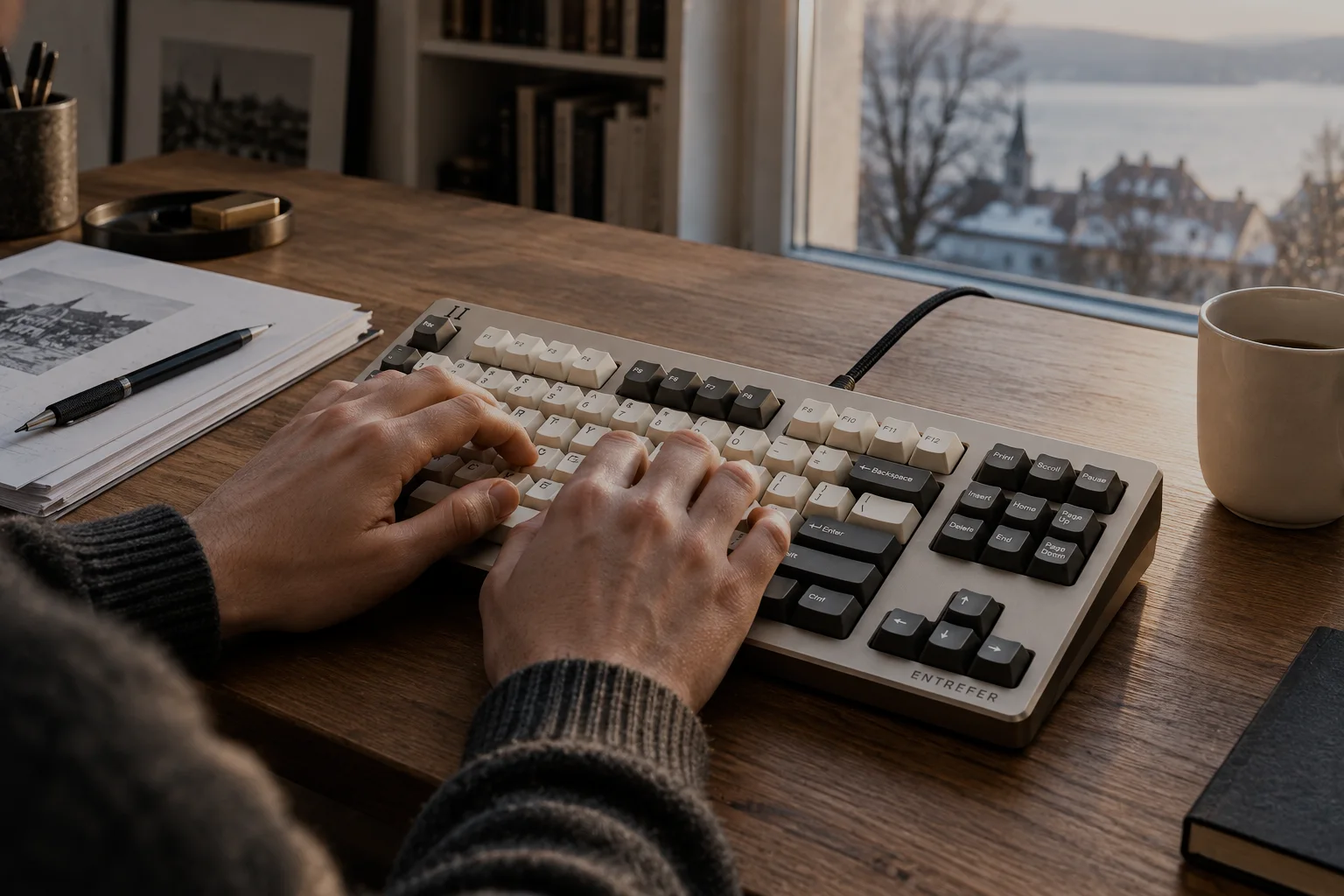
The one that will change
The brass is not sealed.
Every other surface on this keyboard is chosen to stay as it left the bench. The weight is the exception: bare brass, no lacquer. It will be pink when it arrives, gold within a month, and brown within a year, and the pattern it goes brown in is the pattern of where you pick the board up.
If that is not what you want, do not order it — the aluminium bottom is the default and it is 180 g lighter.